Bee Tumbler Wrap 20 Oz Skinny: A Designer's Review
As a designer who spends more time staring at stitch maps than most people spend watching television, I approach every new digital embroidery file with a healthy dose of skepticism. We have all been there: you buy a design based on a glossy thumbnail, load it onto your machine, and realize halfway through that the density is going to turn your fabric into cardboard or the tiny details will vanish into a puckered mess. So, when I recently evaluated the Bee Tumbler Wrap 20 Oz Skinny Tumbler, I wasn't just looking at it as a graphic; I was mentally translating those pixels into thread, needle penetrations, and fabric tension.
The product description states this is a high-resolution 300 DPI file sized at 9.3″ x 8.2″, packaged in a .zip archive. While the listing specifies it is made for a 20oz Straight Skinny Tumbler, my brain immediately started pivoting. In the world of craft business and handmade goods, versatility is king. A design with this specific aspect ratio and thematic weight doesn't just belong on a tumbler; it screams potential for a wide range of custom apparel and home decor items. Let's break down how this asset performs when moved from the screen to the hoop.
First Impressions: Mood and Visual Personality
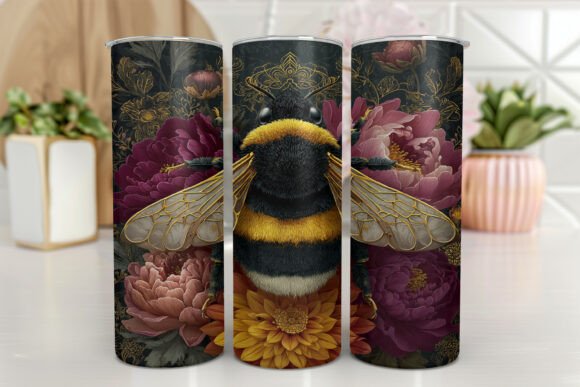
The first thing that strikes me about the Bee Tumbler Wrap 20 Oz Skinny Tumbler is its layout. The dimensions suggest a wrap-around style, which creates a continuous visual narrative. For an embroidery project, this implies a design that needs to flow well without awkward hard stops unless intentionally placed at a seam. The bee theme inherently brings a mood of industry, nature, and sweetness. It feels organic yet structured.
When I visualize this as a machine embroidery design, I am looking at how the "graphics" translate to stitch types. A bee motif usually relies heavily on satin stitch for the wings and body stripes to get that smooth, shiny finish, paired with fill stitch for background elements like flowers or honeycomb patterns. The 9.3-inch width is substantial. On a tumbler, this covers the circumference beautifully. However, on a tote bag design or the back of a denim jacket, this scale allows for significant detail. It feels like a statement piece rather than a subtle accent, which is perfect for boutique branding where you want immediate recognition.
Real-World Application: Beyond the Tumbler
Let's talk about a real case scenario. Imagine a small shop owner preparing for a spring farmers' market. They need a cohesive line of products. While the Bee Tumbler Wrap 20 Oz Skinny Tumbler is marketed for drinkware, I see it working exceptionally well as a large back embroidery on a heavyweight canvas tote. The width fits perfectly across the main panel. Alternatively, consider a personalized gift for a new mother. By scaling the design down slightly (if the license permits) or using a central element of the wrap, it could become a charming baby embroidery motif on a muslin swaddle blanket or a nursery pillow cover.
For Etsy sellers focusing on kitchen linens, this design could be adapted for a tea towel. The horizontal nature of the wrap suits the landscape orientation of a towel. However, one must be careful with stitch density. If the original graphic is dense to look good on a printed tumbler, stitching that same density on a thin linen tea towel could cause severe puckering. This is where the designer's eye must intervene. You might need to simplify the underlay or reduce the fill density to ensure the finished product remains soft and usable.
Navigating Fabric Textures and Challenges
Not every surface is as forgiving as a coated tumbler. When moving this design to textiles, the fabric texture becomes a critical variable. If you are attempting this on a textured fleece sweatshirt for sweatshirt embroidery, the fine details of the bee's wings might get lost in the pile. In such cases, I recommend testing a section first. You might find that a running stitch outline works better than a complex fill to define the shape against the fuzzy background.
Dark fabrics present another challenge. The Bee Tumbler Wrap 20 Oz Skinny Tumbler likely relies on contrast. If the design includes light yellows or whites, they will pop beautifully on navy or black, but you must ensure your thread colors have enough coverage. Using a lighter color stabilizer as a backing can sometimes help prevent the dark fabric from shadowing through light threads, maintaining the vibrancy of the handmade product.
Curved surfaces are tricky. While the design is intended for a straight skinny tumbler, applying this logic to a curved cap brim requires caution. The 8.2-inch height is quite tall for a standard cap front. Trying to force this entire wrap onto a hat would likely result in distortion. It is better suited for the side panels of a tote or the full back of a jacket where the fabric lies flatter during stitching.
Commercial Viability and Brand Consistency
For those running a small shop product line, consistency is key. If you use this design across multiple items—say, a matching set of aprons and oven mitts—the scale must remain relative to the item size. The Bee Tumbler Wrap 20 Oz Skinny Tumbler offers a strong visual anchor. When customers see the same high-quality motif on their tumbler and their tote bag, it builds trust in your brand. It signals professionalism.
However, before listing these items as commercial embroidery products, you must verify the licensing terms included in that .zip archive. The description notes it is for digital files only, but it does not explicitly detail the commercial rights for stitched goods. Always confirm whether you can sell the physical finished product or if the license is restricted to personal use. This step is crucial for protecting your craft business from legal issues down the road.
Practical Notes for the Stitcher
Before committing to a final run, here is my checklist for handling a design of this nature:
- Test on Scrap: Never skip this. Stitch the design on the exact fabric you plan to use for the final item. Check for puckering, especially in the dense areas of the bee's body.
- Stabilizer Selection: Given the likely size and detail, a cut-away stabilizer is often safer than tear-away for garments that will be washed frequently, like t-shirts or baby clothes.
- Hoop Size Verification: The design is 9.3″ x 8.2″. Ensure your machine has a hoop large enough to handle this in one go. If you have to re-hoop, alignment becomes a nightmare, potentially ruining the seamless look of the wrap.
- Thread Contrast: View your digital mockup in black and white. If the design loses definition in grayscale, your thread choices might be too similar in value, making the embroidery look muddy from a distance.
- Wash Testing: If this is for a holiday gift or a product meant for daily use, wash the test sample. See how the stitches hold up. Do they fray? Does the fabric distort?
In conclusion, the Bee Tumbler Wrap 20 Oz Skinny Tumbler is a versatile asset that extends far beyond its name. With careful consideration of fabric type, stitch density, and placement, it can elevate a simple embroidered patch or a full garment into a high-value item. It offers the kind of visual appeal that draws the eye, provided the technical execution matches the artistic intent. For the thoughtful maker, this design is not just a file; it is a foundation for a successful, tangible product.