Fishing Lake Bass Scene 20oz Tumbler Design Review
As a designer who spends more time staring at stitch maps than most people care to admit, I approach every new digital embroidery file with a mix of curiosity and skepticism. We have all been there: you buy a design that looks stunning on the screen, only to find out it turns into a bird's nest of thread once it hits the fabric. Today, I am taking a close look at the Fishing Lake Bass Scene 20oz Tumbler. While the product listing categorizes this under Tumbler Wraps and Graphics, my job is to translate those high-resolution PNG assets into tangible, stitched reality for real-world projects.
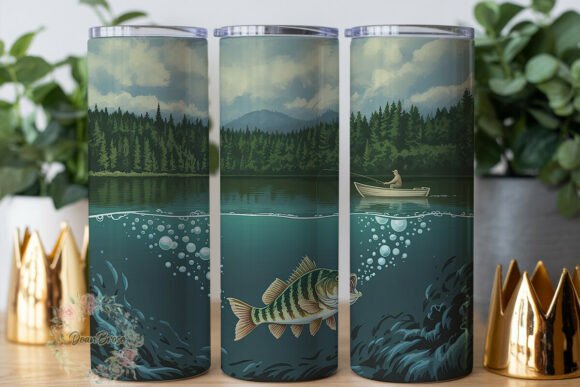
The first thing that strikes me about this design is its mood. It captures that quiet, early-morning stillness of a lake perfectly. The composition suggests a narrative rather than just a random collection of images. For an Etsy seller or a craft business owner, storytelling is everything. Customers do not just buy a shirt; they buy the feeling of being out on the water. This design leans heavily into that emotional connection, making it an excellent candidate for personalized gifts for anglers, fathers, or outdoor enthusiasts.
Translating Graphics into Stitched Reality
The source files provided are high-resolution PNGs (300 DPI) sized at 9.3″ x 8.2″, available for both straight and tapered tumblers. As an embroiderer, my immediate task is digitizing this graphic or using it as a reference for a complex applique design. The level of detail in a scene like this dictates how we approach the stitching. If you are planning to recreate this as a machine embroidery design, you cannot simply rely on auto-digitizing software. The nuances of the water, the texture of the bass scales, and the subtle gradients of the sky require a human touch.
In a real-life scenario, imagine preparing a custom order for a local fishing lodge. They want branded sweatshirt embroidery for their guides. Using the Fishing Lake Bass Scene 20oz Tumbler as your visual blueprint allows you to create a cohesive brand identity. You might adapt the scene for a large back patch on a hoodie, utilizing fill stitch for the water and satin stitch for the bold outlines of the fish. The clarity of the original graphic ensures that when you break it down into thread colors, you maintain the depth and dimension that makes the image pop.
Practical Application and Fabric Considerations
When considering where to place this design, versatility is key. However, not every surface is created equal. A design with this much scenic detail thrives on stable, flat surfaces. Think tote bag design applications on heavy canvas or denim. The sturdy nature of these fabrics supports the stitch density required to render a detailed lake scene without puckering.
Conversely, you must exercise caution with stretchy or textured fabrics. If you attempt to stitch a highly detailed version of this scene onto a thin, stretchy t-shirt, you risk distortion. The fabric texture can swallow fine details, turning a crisp bass into a blurry blob. For baby embroidery or delicate garments, I would recommend simplifying the design significantly, perhaps focusing solely on the silhouette of the fish and reducing the background elements to minimal running stitch outlines.
Curved surfaces present another challenge. While the original asset is marketed for tumblers, translating this to a cap requires careful manipulation. The front panel of a cap is small and curved. Trying to force a 9-inch wide scene onto a cap will result in compression and loss of detail. In this case, crop the design. Focus on the bass itself as a standalone embroidered patch element. This adaptation shows true design judgment—knowing when to use the whole image and when to extract the hero element.
Enhancing Product Value and Customer Trust
The quality of your finished product directly impacts your reputation. A sloppy stitch job on a beautiful design ruins the illusion. When executed correctly, however, this scene elevates a standard garment into a boutique item. For small shop products, presentation is everything. Using high-quality threads that match the vibrant blues and greens of the original PNG ensures the finished product looks professional.
Consider the lighting and contrast. Before committing to a client's expensive jacket, always test the design on scrap fabric. Check how the thread color contrast holds up against dark navy versus light grey backgrounds. Sometimes, a design that looks great on white needs an underlay adjustment or a border to stand out on black fabric. This step is crucial for maintaining brand consistency across different merchandise lines.
Furthermore, think about durability. Items like aprons, kitchen towels, and holiday embroidery projects undergo frequent washing. Dense stitch areas, common in scenic designs, can become stiff if not managed well. Ensure you are using the correct stabilizer—likely a cut-away for long-term durability—to prevent the design from sagging after multiple wash cycles. This attention to detail builds customer trust; they know your handmade items are built to last.
Designer Notes for Commercial Success
If you are an Etsy seller looking to expand your catalog, this graphic offers a solid foundation for various design assets. You could offer a service where you customize the scene with a name or date, turning it into a unique wedding gift for a couple who loves fishing. However, before selling, you must verify the licensing terms. The product description notes that watermarks are removed upon download, but it does not explicitly state the commercial license scope for the embroidery conversion. Always confirm whether you are allowed to sell the digitized embroidery file itself or only the physical stitched items.
Here are a few practical steps I take before finalizing a project based on a graphic like this:
- Test on Scraps: Never skip the test run. Verify the hoop size requirements and ensure the design fits your machine's field.
- Check Density: Analyze the stitch count. If the water area is too dense, consider breaking it up with lighter fill patterns to reduce bulk.
- Mockup Verification: Create black and white mockups to check value contrast. If the fish blends into the water in grayscale, adjust your thread choices.
- Detail Inspection: Zoom in on the small corners and fine lines. Tiny details often need to be enlarged or simplified to stitch cleanly.
- License Confirmation: Double-check usage rights for commercial embroidery projects to avoid legal issues down the road.
In conclusion, the Fishing Lake Bass Scene 20oz Tumbler is more than just a sublimation wrap; it is a versatile visual asset for the creative entrepreneur. Whether you are creating custom apparel, decorative pillow covers, or limited edition patches, the key lies in thoughtful adaptation. By respecting the limitations of the medium and leveraging the strengths of the original artwork, you can create handmade products that resonate deeply with your audience. It is about taking a digital concept and giving it a soul through the needle and thread.