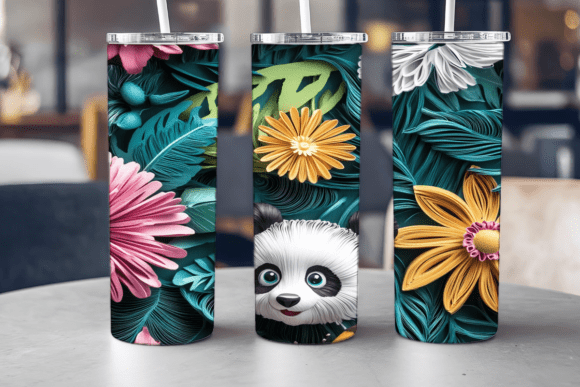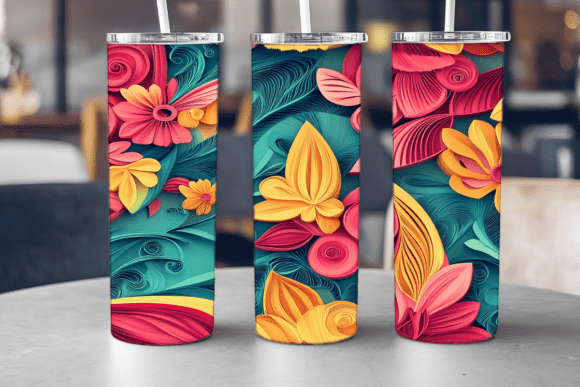
Orchid Bloom Tumbler: A Designer's Real-World Review
As someone who spends hours digitizing and stitching for clients, I approach every new machine embroidery design with a critical eye. It is not enough for a graphic to look pretty on a screen; it must translate flawlessly into thread, holding up under the needle and satisfying the end customer. Recently, I evaluated the Orchid Bloom Tumbler to see if it holds up as a viable asset for serious craft businesses and boutique owners. While the product listing describes it as a 300 DPI wrap for 20oz skinny tumblers intended for sublimation or printing, my focus was on adapting this aesthetic for embroidered applications like patches, tote bags, and custom apparel.
First Impressions and Visual Personality
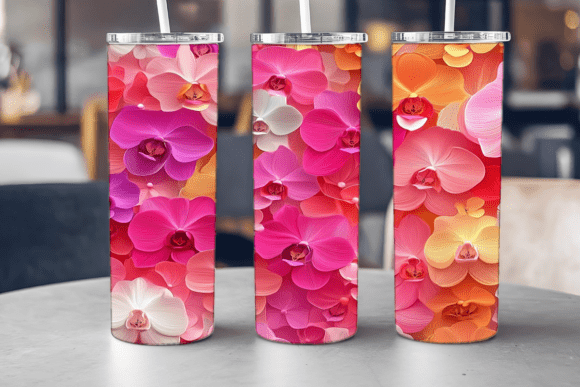
The moment you pull up the Orchid Bloom Tumbler graphic, the mood is immediately clear: elegant, organic, and slightly tropical without being overwhelming. The layout features a flowing orchid motif that suggests movement, which is crucial for embroidery where static images can sometimes feel stiff. For an embroidery designer, the shape of the bloom offers excellent opportunities for varied stitch types. The petals naturally lend themselves to smooth satin stitch columns, while the centers and leaves could be beautifully rendered with textured fill stitch or even delicate running stitch outlines for a more hand-drawn feel.
This visual personality makes the design incredibly versatile. It does not scream "novelty item"; instead, it whispers "boutique quality." This is exactly the kind of aesthetic that elevates a handmade product from a simple craft fair find to a high-end gift shop staple. Whether you are creating a personalized gift for a wedding or developing a line of small shop products, the sophistication of the orchid theme adds immediate perceived value.
Real-World Application Scenarios
To truly test the viability of this design, I imagined several real-life production scenarios. Picture a local coffee shop owner who wants branded merchandise. Adapting the Orchid Bloom Tumbler concept into an embroidered patch sewn onto canvas tote bags would create a durable, washable alternative to printed wraps. The organic lines of the orchid would stand out beautifully against natural fabric textures, offering a tactile experience that paper or vinyl cannot match.
Another strong use case is sweatshirt embroidery. Imagine a soft, heather-grey crewneck featuring the orchid bloom on the left chest or as a larger back piece. The design's flow works well on curved surfaces like sleeves or the body of a garment. For baby embroidery, scaling down the motif for a onesie or bib creates a gentle, nature-inspired look that parents love. However, one must be mindful of scale; what works on a 20oz tumbler might need significant simplification when reduced for a baby item to prevent stitch congestion.
For Etsy sellers and creative entrepreneurs, this design could anchor a entire collection of holiday embroidery or spring-themed goods. Think of embroidered pillow covers, kitchen tea towels, or even aprons. The key is recognizing that while the source file is a graphic for tumblers, the artistic elements are what matter most when translating it into a digital embroidery file or using it as a reference for custom digitizing.
Technical Considerations and Fabric Challenges
Translating a high-resolution graphic like Orchid Bloom Tumbler into thread requires careful planning regarding stitch density and fabric choice. Orchids often feature gradients and fine details that can be tricky to replicate with thread. On textured fabrics like Terry cloth or heavy canvas, fine details may get lost. In these cases, I recommend simplifying the design, perhaps focusing on bold outlines and solid fills rather than attempting to mimic every subtle shade of the original 300 DPI image.
When working with stretchy fabrics, such as those used in custom apparel or fitted caps, stability is paramount. A dense floral design can cause puckering if the proper stabilizer is not used. For caps, which have a curved surface similar to the intended tumbler application, the design must be digitized with pull compensation in mind to ensure the orchid does not distort after stitching. Additionally, dark fabrics present a challenge; if the original graphic relies on light colors, you may need to adjust thread colors or add a backing layer to ensure the bloom pops against the background.
Small hoop sizes also require scrutiny. If you intend to use this as a accent on a pocket or a narrow strap, you must verify that the intricate corners of the orchid petals do not become muddy. Tiny lettering, if added to complement the bloom, should be kept minimal and placed away from dense stitch areas to maintain clarity.
Enhancing Brand Value and Customer Trust
In the world of commercial embroidery, consistency is king. Using a cohesive design element like the Orchid Bloom Tumbler across various products—from tote bags to patches—helps build brand recognition. Customers associate the high-quality finish of the embroidery with professionalism. A well-executed orchid motif signals that time and care were invested, fostering trust and encouraging repeat business.
Furthermore, the "giftability" of such a design is high. People are always looking for unique, personalized items for weddings, birthdays, or housewarmings. An embroidered item featuring this bloom feels special and enduring compared to a mass-produced print. It transforms a standard finished product into a keepsake.
Practical Notes for Designers and Makers
Before committing to a full production run, there are several steps every responsible maker should take. First, always test the design on scrap fabric that matches your final material. This allows you to check thread color contrast and ensure the stitch density does not compromise the fabric's drape. Second, review the design in black and white mockups to verify that the contrast holds up without relying on color alone.
It is also vital to confirm licensing terms. Since the Orchid Bloom Tumbler is marketed as an instant digital download for gift shops, ensure you have the rights to use the graphic for commercial embroidery projects or if you need to re-digitize it yourself. Never assume a sublimation wrap license covers embroidery usage. Finally, consider your audience; does this floral aesthetic fit their style? Testing a single prototype at a craft fair or showing it to a focus group can save you from producing unsold inventory.
In conclusion, while the Orchid Bloom Tumbler originates as a graphic for drinkware, its artistic merit makes it a strong candidate for adaptation into the embroidery realm. With thoughtful digitizing, appropriate material selection, and attention to technical details, this design can become a standout element in any craft business portfolio, delivering beauty and durability in equal measure.