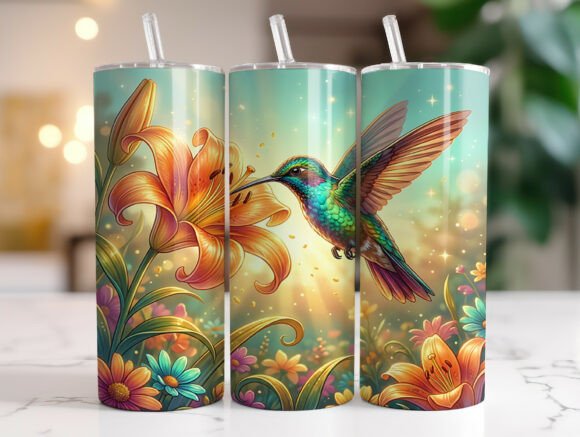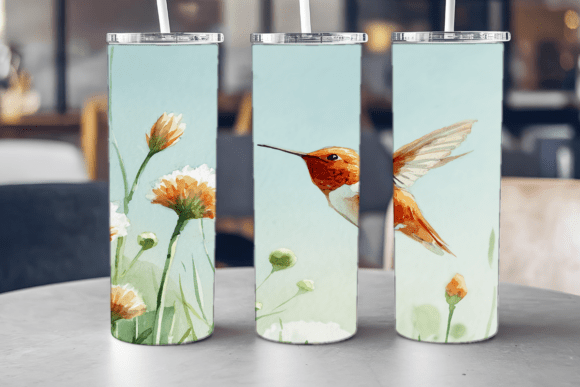
Soft Watercolor Hummingbird Tumbler Design Review
As a designer who spends more time staring at stitch maps than most people care to admit, I approach every new machine embroidery design with a mix of excitement and skepticism. We have all been there: you buy a beautiful graphic, convert it, or download a file, only to find that what looked stunning on the screen turns into a muddy mess of thread on fabric. Today, I am taking a close look at the Soft Watercolor Hummingbird Tumbler. While the product listing categorizes this under Tumbler Wraps and Graphics, my interest lies in how this specific visual asset translates when we move beyond sublimation and into the tactile world of stitched textiles.
First Impressions: Mood and Visual Personality
The moment you open the file for the Soft Watercolor Hummingbird Tumbler, the mood is immediately apparent. It is airy, delicate, and distinctly feminine without being overly saccharine. The watercolor aesthetic suggests soft edges and blending colors, which presents a unique challenge for embroidery. In a digital printable mockup, these gradients look seamless. However, as an embroiderer, my brain immediately starts deconstructing how those soft transitions will be achieved with thread.
The layout feels organic. Unlike rigid vector art, this design relies on the fluidity of the hummingbird's wings and the surrounding floral elements. For a craft business owner, this visual personality is gold. It speaks to a customer base that values handmade nuance over mass-produced perfection. If you are looking to create a personalized gift that feels thoughtful and boutique-quality, this design hits the right emotional notes. It does not scream for attention; rather, it invites a closer look, which is exactly what you want for high-end small shop products.
Real-World Application: From Screen to Stitch
Let us imagine a real scenario. You have a client who wants a custom sweatshirt embroidery piece for a spring collection. They want something that feels light and seasonal. The Soft Watercolor Hummingbird Tumbler is a strong contender here. On a heather grey or soft cream fleece, the design would pop beautifully. The key is treating the graphic not just as an image to be printed, but as a blueprint for texture.
If you are using this as a reference to create a custom embroidery file, you would likely lean heavily on fill stitch techniques with low density to mimic that watercolor bleed. Alternatively, if you are applying this graphic directly as a transfer for a mixed-media project, the 300 DPI resolution mentioned in the description ensures crisp lines. For a tote bag design, this imagery works exceptionally well. Canvas tote bags provide enough stability to handle detailed work, and the nature theme aligns perfectly with the eco-friendly vibe many tote bag users prefer.
I also see potential for baby embroidery. A onesie or a nursery blanket featuring this hummingbird could be a standout item for an Etsy seller. The soft colors are gender-neutral enough to appeal to a broad market while still feeling special. However, one must be cautious. Baby clothes often involve stretchy, thin fabrics. If you are digitizing this yourself based on the graphic, you must account for fabric pull. A dense satin stitch border might be too heavy for a baby garment, so opting for a lighter running stitch outline or a sparse fill would be wiser.
Technical Considerations and Fabric Challenges
Here is where we need to be brutally honest about the limitations. The Soft Watercolor Hummingbird Tumbler is described as a graphic file (PNG). If your plan is to print this onto heat transfer vinyl or use it for sublimation on a cap, you are in safe territory regarding the file format. But if you intend to use this image as a direct guide for stitching without proper digitization, you will run into issues.
Watercolor effects rely on transparency. Thread does not have transparency; it has opacity. To replicate this look, you need expert layering. If you attempt to stitch this on dark fabric without a proper underlay or background patch, the vibrant watercolor hues will vanish. You might need to consider an applique design approach, where you stitch a light-colored fabric base first, then stitch the hummingbird on top. This adds dimension and solves the contrast issue.
Furthermore, consider the hoop size. Hummingbirds have intricate wing details. If you are working with a small hoop, say 4x4 inches, you might lose the finer "watercolor" drips and splashes that give the design its character. Always test the design on scrap fabric first. Check the stitch density. If the digitized version (if you are creating one from this graphic) is too dense, the fabric will pucker, ruining the soft illusion. For textured fabrics like towels or blankets, ensure your stabilizer game is strong. A cut-away stabilizer is usually best for items that will undergo frequent washing, ensuring the finished product retains its shape.
Commercial Viability and Brand Consistency
For those running a commercial embroidery operation, consistency is everything. Does the Soft Watercolor Hummingbird Tumbler fit your brand? If your shop specializes in bold, geometric, or corporate logos, this might feel out of place. But for boutiques focusing on lifestyle, nature, or whimsical themes, it is a perfect fit. Using this design across a range of products—from embroidered patches to kitchen towels—can help build a cohesive collection.
Customer trust is built on quality. If you sell a hoodie with this design and the threads snag or the colors look muddy because the conversion from graphic to stitch was poor, you lose that trust. Conversely, if you take the time to select the right thread colors—perhaps variegated threads to enhance the watercolor effect—you elevate the perceived value of the item. This design has the potential to command a higher price point if executed with care.
Practical Designer Notes for Success
Before you commit to producing a batch of goods using the Soft Watercolor Hummingbird Tumbler, keep these practical steps in mind:
- Verify Licensing: The product description states "Instant Download" and "Digital File Only." Always confirm the specific license terms. Can you sell physical items made with this graphic? Can you resell the digital file? Never assume; read the fine print to protect your craft business.
- Test on Various Backgrounds: Create mockups on both light and dark backgrounds. See how the watercolor transparency interacts with different base colors before cutting any fabric.
- Stabilizer Selection: Do not skimp here. For a design with this much detail, a high-quality stabilizer is non-negotiable to prevent distortion.
- Thread Contrast: If digitizing, ensure your thread chart offers enough variation to capture the depth of the watercolor style without creating a chaotic look.
- Wash Testing: If the final product is meant to be washed (like apparel), run a wash test on your sample. Watercolor-style stitches can sometimes fray if not tacked down properly.
In conclusion, the Soft Watercolor Hummingbird Tumbler is a versatile and evocative graphic that holds significant potential for creative entrepreneurs. Whether you are using it for its intended purpose as a wrap or adapting it for custom apparel and home decor, success lies in the execution. Treat it with the respect a delicate subject deserves, pay attention to the technical constraints of embroidery, and you will end up with a handmade product that customers will cherish. It is a reminder that in our industry, the bridge between a digital pixel and a physical stitch is where the true magic happens.