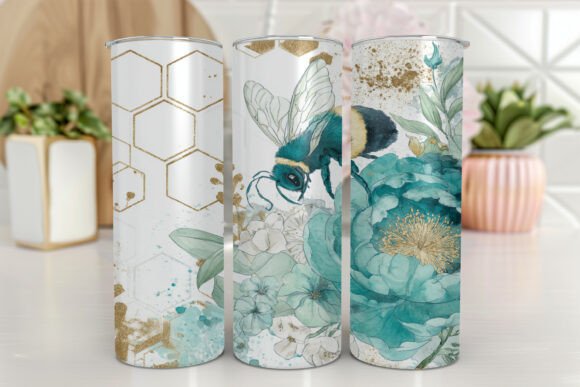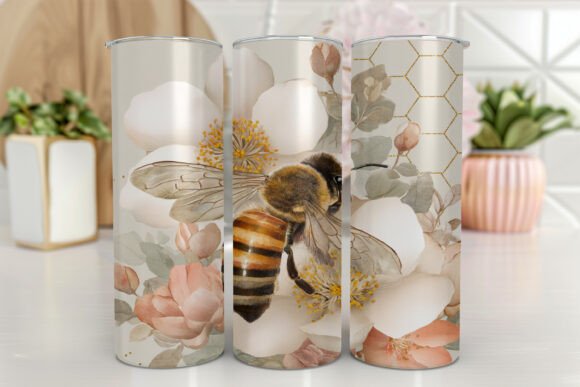
Bee 20oz Sublimation Tumbler Design Review
As a designer who spends more time staring at stitch maps than most people care to admit, I approach every new digital embroidery file with a mix of excitement and skepticism. We have all been there: you download a beautiful graphic, convert it, or purchase a pre-made design, only to find that what looked perfect on the screen turns into a bird's nest of thread on the fabric. Recently, I took a close look at the Bee 20oz Sublimation Tumbler Designs. Now, I know what you are thinking immediately. The title says "Sublimation Tumbler," and the specs list a size of 9.3″ x 8.2″ intended for Tumbler Wraps. So, why is an embroidery expert reviewing a sublimation graphic? The answer lies in how we, as creative entrepreneurs, actually work.
In the world of craft business and handmade goods, assets are rarely one-dimensional. A high-resolution graphic designed for a tumbler wrap often holds the key to a stunning embroidery project if you know how to adapt it. When I opened the .zip archive containing this design, my first impression was not about cups; it was about potential application on textiles. The visual personality of the bee motif is bold, cheerful, and incredibly versatile. It screams "spring market," "baby shower," and "boutique branding" all at once. While the original intent is clearly for Graphics on metal, the clarity of the lines and the composition suggest that, with the right digitizing or manual punch-out, this could become a standout machine embroidery design for a variety of substrates.
From Screen to Stitch: Visualizing the Real-World Application
Let's get practical. Imagine you are preparing a custom order for a local boutique that wants a line of eco-friendly tote bags featuring local pollinators. You need a design that pops but doesn't overwhelm the canvas texture. This bee design, originally scaled for a 20oz skinny tumbler, offers a tall, vertical layout that is surprisingly perfect for the side panel of a tote bag or the leg of a pair of jeans. The mood it creates is warm and inviting, tapping into the current trend of nature-inspired home decor and apparel.
However, translating a 300 DPI sublimation file into a stitched finished product requires careful thought. If you are using this as a reference to create your own embroidery file, or if you are considering how similar large-scale graphics perform when stitched, you must consider stitch density. A design meant for print can be infinitely detailed, but thread has physical limits. In a real-life scenario, such as creating a sweatshirt embroidery piece for a university club or a family reunion, a design of this magnitude (9.3 inches tall) demands a large hoop. You cannot simply shrink this down to a 4x4 hoop without losing the character of the bee. The intricate details that look crisp in a printable mockup might turn into a dense blob of satin stitch or fill stitch if not properly adjusted for thread.
Navigating Fabric Textures and Hoop Limitations
One of the most critical aspects of using large-scale designs like this is understanding where they should be used carefully. If you attempt to stitch a design of this scale on a stretchy fabric like a thin cotton t-shirt without the proper stabilizer, you are asking for distortion. The weight of the thread alone can pull the garment out of shape, leading to a handmade product that looks amateurish rather than professional. For best results, this type of imagery belongs on sturdy materials: denim jackets, canvas tote bag design applications, heavy-weight hoodies, or even structured embroidered patch creations.
Furthermore, consider the thread colors. Sublimation files rely on gradients and millions of color shades. Embroidery relies on solid spools. When adapting this bee concept, you will need to simplify the color palette. A gradient wing in a graphic might need to be translated into a strategic blend of two or three thread colors using a running stitch overlay or varied fill angles to mimic depth. If you ignore this step and try to force too many color changes, the production time skyrockets, killing your profit margin as an Etsy seller or small shop owner.
Commercial Viability and Customer Perception
Why does any of this matter? Because customer trust is built on the quality of the custom apparel or gift they receive. Whether you are selling holiday embroidery items for Christmas or baby embroidery for a nursery, the visual appeal directly impacts perceived value. A well-executed bee design on a pillow cover or kitchen towel suggests attention to detail. It tells the buyer that you didn't just slap a generic image on a product; you curated it.
For those running a small shop product line, consistency is key. If you use this bee motif across different items—perhaps as a sublimated tumbler and an embroidered apron—you create a cohesive brand identity. However, you must verify the licensing terms. The product description notes that the listing is for digital files only. Before you sell a personalized gift or a commercial item based on this artwork, you must confirm that the license allows for physical goods sales. Many designers purchase these assets assuming they are free for commercial use, only to face issues later. Always check the specific terms regarding commercial embroidery and resale rights.
Practical Notes for the Serious Maker
If you decide to move forward with adapting this graphic for embroidery, here is my professional advice based on years of trial and error:
- Test on Scrap First: Never run a large design on your final garment without a test stitch-out on similar fabric. Check how the fabric texture interacts with the thread.
- Check Contrast: Ensure your chosen thread colors stand out against the background fabric. A yellow bee on a cream towel might vanish; add a dark outline or choose a darker garment.
- Review Density: If digitizing this yourself, reduce the fill density to prevent the fabric from puckering, especially on corners and detailed areas.
- Confirm Hoop Size: As mentioned, this is a large design. Ensure your machine can handle the dimensions or be prepared to split the design into sections (though splitting a bee is tricky and often not recommended).
- Mockup in Black and White: Before buying thread, view your design in grayscale. This helps you see if the contrast holds up without the distraction of color.
- Stabilizer Matters: For a design of this size, a cut-away stabilizer is often safer than tear-away, providing long-term support for the stitches.
In conclusion, while the Bee 20oz Sublimation Tumbler Designs package is technically marketed for drinkware, its value extends far beyond the cup. For the observant designer, it represents a flexible asset that, when treated with respect for the limitations and strengths of embroidery, can elevate a wide range of products. From design assets for digital previews to the tangible feel of a stitched patch, the potential is there. It just requires the human touch of a maker who understands that great design isn't just about the file you download; it's about how you bring it to life on the fabric.