Hummingbird Flower Garden Tumbler: A Designer's Review
As a designer who spends more time staring at stitch maps than most people spend watching television, I approach every new digital embroidery file with a healthy dose of skepticism. We have all been there: you buy a design that looks vibrant on the screen, only to find it turns into a puckered mess of thread breaks and lost details once it hits the fabric. Today, I am taking a close look at the Hummingbird Flower Garden Tumbler. While the product listing categorizes this under Tumbler Wraps and Graphics specifically for sublimation on 20oz skinny tumblers, my job is to evaluate its potential beyond the printer. Can this graphic translate into a viable machine embroidery design for custom apparel and handmade goods? Let's dig into the visual personality and practical application of this asset.
First Impressions: Mood and Visual Flow
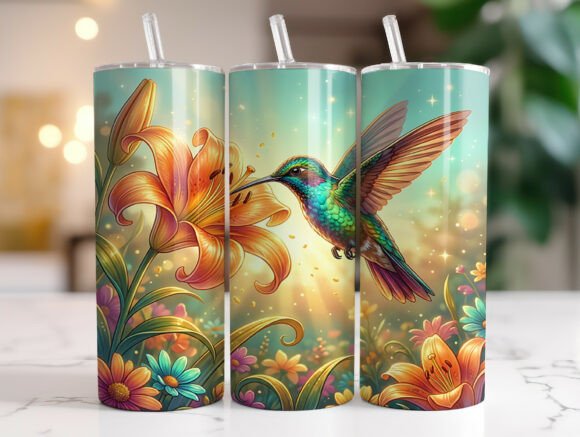
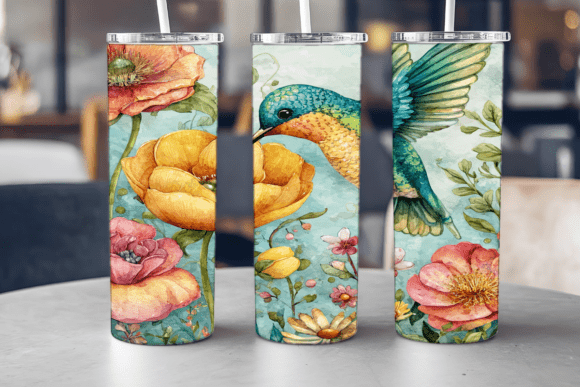
The moment I opened the high-resolution PNG, the first thing that struck me was the organic flow of the composition. The Hummingbird Flower Garden Tumbler features a layout that feels less like a rigid clip-art arrangement and more like a snapshot of nature. The hummingbird is captured in mid-hover, creating a sense of motion that is crucial for keeping the viewer's eye moving across the design. For an Etsy seller or craft business owner, mood is everything. This design exudes a springtime freshness that would resonate deeply with customers looking for personalized gifts or boutique branding.
The level of detail in the floral elements suggests a complexity that needs careful handling. In the world of Graphics, gradients and fine lines print beautifully on Sawgrass or Epson printers. However, when we mentally convert this image into an embroidery project, we have to think about how those soft color transitions will translate into thread colors. The visual personality here is delicate yet vibrant, making it an excellent candidate for projects where elegance is the goal, rather than bold, blocky statements.
Real-World Application: From Screen to Stitch
Let's imagine a real-life scenario. You run a small shop specializing in eco-friendly tote bags and linen aprons. A client approaches you wanting a "nature-inspired" series for their boutique hotel. The Hummingbird Flower Garden Tumbler graphic, despite being marketed for drinkware, offers a perfect motif for this request. If you were to digitize this image or commission a custom punch based on this artwork, it would shine on a natural canvas tote bag design.
The curvature of the flowers wrapping around the imaginary tumbler shape actually works in your favor when placing the design on curved surfaces like caps or rounded pillow covers. The composition naturally guides the eye around the form. For sweatshirt embroidery, this design would look stunning centered on the chest or as a larger back piece on a zip-up hoodie. The key here is recognizing that while the source material is a sublimation wrap, the artistic elements are versatile enough to become a flagship small shop product if adapted correctly for needle and thread.
Furthermore, for those selling printable mockups or design assets, this image provides immediate value. You can use it to create compelling previews for customers before you even stitch a single thread. It helps visualize how a finished product might look, increasing buyer engagement and trust in your brand's aesthetic consistency.
Navigating Fabric and Texture Challenges
Here is where we need to be realistic. Taking a graphic intended for smooth, coated tumbler surfaces and applying it to textiles comes with risks. If you attempt to recreate the intricate details of the Hummingbird Flower Garden Tumbler on textured fabrics like terry cloth towels or heavy fleece, you will lose definition. Fine lines in the bird's wings or the petal edges could get swallowed by the fabric texture.
You must also consider stitch density. In embroidery, too many stitches in a small area lead to stiffness and potential fabric distortion. If this design were digitized with dense fill stitch areas to mimic the solid colors of the PNG, it might become too rigid for stretchy materials like baby clothes or thin t-shirts. For baby embroidery, I would recommend simplifying the design, perhaps using an applique design technique where the flowers are cut from fabric and stitched down with a satin border, rather than trying to fill-stitch every petal. This reduces bulk and maintains the softness required for sensitive skin.
Dark fabrics present another hurdle. The original graphic likely relies on light backgrounds to make the colors pop. If stitching this on a navy or black garment, you would need to incorporate an underlay or a backing layer to prevent the dark fabric from showing through the lighter thread colors, which can muddy the vibrancy of the hummingbird.
Enhancing Product Value and Professionalism
Why go through the trouble of adapting a graphic for embroidery? Because the perceived value of a hand-stitched item is significantly higher than a printed one. A custom apparel piece featuring the Hummingbird Flower Garden Tumbler motif, executed with high-quality satin stitch borders and precise running stitch details, signals craftsmanship. It tells the customer that time and skill went into their holiday embroidery or wedding gift.
This attention to detail builds customer trust. When a buyer sees that the intricate details of the garden theme have been carefully preserved in thread, they associate that quality with your entire brand. It transforms a simple image into a recognizable signature for your handmade product line. Whether it is an embroidered patch for a jacket or a detailed motif on a kitchen towel, the professionalism of the execution directly impacts your ability to charge premium prices.
Essential Notes for the Practical Designer
Before you commit this design to a client's expensive garment, there are several critical steps you must take. First and foremost, test the design on scrap fabric that matches your final material. Do not skip this step. Check how the thread interacts with the weave and whether the stabilizer you chose is sufficient to hold the shape without tearing.
- Check Thread Color Contrast: Ensure that the shades selected for the flowers distinguish themselves clearly from the background fabric and from each other.
- Review Stitch Density: If digitizing this yourself, avoid over-saturating small areas. Use lighter fills or open patterns to maintain fabric drape.
- Confirm Hoop Size: The original graphic is sized for a tall, narrow tumbler. Ensure your embroidery hoop can accommodate the vertical length of the design without needing to re-hoop, which can cause alignment issues.
- Inspect Small Details: Tiny elements like the bird's beak or stamen in the flowers may need to be enlarged or simplified to stitch out cleanly.
- Test in Black and White: Convert your mockup to grayscale to check if the design holds up without relying solely on color contrast.
- Licensing Verification: The product description states "Commercial Use Welcome," but always double-check the specific license terms regarding modification. Since this is sold as a graphic for printing, ensure you have the right to adapt it into a stitch file for resale if that is your intention.
In conclusion, the Hummingbird Flower Garden Tumbler is a visually striking asset that holds immense potential for the creative entrepreneur willing to put in the preparatory work. While it originates as a sublimation graphic, its artistic merit makes it a strong contender for adaptation into high-end commercial embroidery projects. By respecting the limitations of fabric and thread, and by approaching the digitization process with a critical eye, you can turn this digital file into a tangible masterpiece that delights customers and elevates your portfolio.