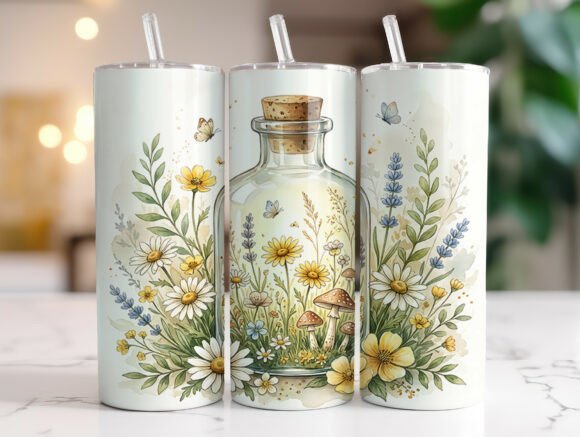
Wildflower Bottle Garden Floral Tumbler Design Review
As a designer who spends more time at the hoop than anywhere else, I approach every new digital embroidery file with a mix of curiosity and skepticism. We have all been there: you download a beautiful graphic, digitize it (or buy a pre-digitized version), and realize too late that the stitch count is astronomical or the details vanish on textured fabric. Today, I am taking a close look at the Wildflower Bottle Garden Floral Tumbler. While this asset arrives as a high-resolution PNG intended for sublimation or printing on Tumbler Wraps, my job is to evaluate its potential life beyond the tumbler. Can this botanical illustration translate into a stunning machine embroidery design for custom apparel and handmade goods? Let's dig into the practicalities.
First Impressions: Mood and Layout
The moment you open the file, the mood is unmistakably rustic and serene. The composition features a lush arrangement of wildflowers, likely including daisies, lavender, and perhaps some wheat or grasses, creating a "bottle garden" aesthetic. At 9.3″ x 8.2″ and 300 DPI, the resolution is crisp, which is a promising sign for any designer planning to convert raster images into vector paths for stitching. The layout is vertical and slightly tapered in one variation, perfectly suited for the curvature of a 20oz skinny tumbler, but for us embroiderers, the straight version holds more versatility.
Visually, the design feels organic. It avoids the rigid symmetry often found in generic clip art, opting instead for a natural, slightly wild growth pattern. This is excellent news for embroidery because organic shapes forgive minor registration errors better than geometric ones. However, the density of the floral elements suggests that if you were to recreate this as an applique design or a full fill stitch project, you would need to be strategic about layering to prevent the design from becoming a stiff, cardboard-like patch on your fabric.
Real-World Application Scenarios
I recently had a client request a line of spring-themed tote bags for a local farmer's market, and this is exactly where a design like Wildflower Bottle Garden Floral Tumbler shines. Imagine converting these floral clusters into a series of embroidered patches. By using a combination of satin stitch for the flower petals and running stitch for the delicate stems, you could create a textured, high-value handmade product that stands out against canvas or denim.
For Etsy sellers and small shop owners, the versatility here is significant. This graphic could easily be adapted for:
- Sweatshirt embroidery: Placed on the left chest or as a large back print, the wildflower theme appeals to the current cottage-core trend.
- Baby embroidery: Softened color palettes of this design would work beautifully on bibs or onesies, provided the stitch density is reduced for sensitive skin.
- Kitchen towels and aprons: The botanical theme fits naturally in home decor, adding a touch of elegance to linen tea towels.
- Holiday gifts: With slight color adjustments, this could serve as a lovely Mother's Day or spring wedding gift motif.
The key to success in these scenarios is treating the PNG as a reference map rather than a direct stitch file. Since the product includes Graphics meant for printing, using them as a visual guide for your own digitizing allows you to control the stitch density and direction, ensuring the final result looks professional rather than pixelated.
Navigating Technical Challenges
While the aesthetic is strong, we must address the technical hurdles. A design this detailed does not automatically translate well to every surface. If you are planning to stitch this onto a curved surface like a cap, the wide spread of the wildflowers might cause distortion. Caps require narrower, more compact designs to sit flat on the front panel. Similarly, attempting to stitch fine details onto textured fabrics like thick fleece or waffle weave can result in lost definition. The tiny leaves and petal edges might get swallowed by the fabric texture unless you use a heavy cut-away stabilizer and perhaps simplify the inner details.
Another consideration is fabric texture and stretch. On stretchy knits used for custom apparel, a dense floral block can restrict movement and cause puckering. In these cases, I recommend breaking the design apart. Instead of one massive fill, consider turning the flowers into individual appliqué pieces or using lighter fill stitches with more underlay. Always test the design on scrap fabric first. This cannot be overstated. What looks perfect on your screen might behave differently when thousands of stitches pull on the grain of the fabric.
Enhancing Brand Value and Customer Trust
In the world of commercial embroidery and craft business, consistency is king. Using a cohesive design element like the Wildflower Bottle Garden Floral Tumbler across different products helps build brand recognition. If a customer buys a tumbler wrap with this design and then sees a matching embroidered tote bag, the visual connection reinforces your professionalism. It tells the buyer that you care about the details.
However, clarity is crucial for maintaining that trust. If the thread colors do not have enough contrast, the intricate details of the wildflowers will blur together, especially from a distance. Before committing to a production run, test your design in black and white mockups. If the design loses its shape without color, you need to adjust your thread choices or digitizing strategy. High-quality presentation in your printable mockup listings is only half the battle; the finished product must deliver on that promise.
Practical Notes for the Working Designer
Before you integrate this asset into your workflow, keep these practical steps in mind:
- Check Licensing: Since this is sold as a digital download for tumbler wraps, verify the license terms before selling finished embroidered items. Some creators allow commercial use of the physical item but restrict reselling the digital file itself.
- Hoop Size Verification: The design dimensions are roughly 9 inches tall. Ensure your machine and hoop setup can accommodate this size, or be prepared to split the design into sections for larger projects like blanket backs.
- Stitch Type Selection: Decide early if you are going for a vintage look with varied stitch types or a modern, clean look with uniform fills. The organic nature of wildflowers suits a mix of satin stitch borders and textured fill stitches.
- Background Testing: Test the design on both light and dark fabric backgrounds. You may need to add a backing layer or adjust thread shades to ensure the flowers pop against navy or black garments.
- Detail Inspection: Zoom in on the smallest leaves and stems. If they are too thin for your needle size, simplify them during the digitizing phase to prevent thread breaks.
Ultimately, the Wildflower Bottle Garden Floral Tumbler offers a rich visual foundation for creative entrepreneurs. It is not just a picture for a cup; it is a potential centerpiece for a entire collection of personalized gifts and boutique merchandise. By approaching it with a critical eye for stitch mechanics and fabric compatibility, you can transform a simple PNG into a premium embroidered asset that customers will love. Remember, the difference between a good product and a great one often lies in the preparation and the willingness to test before you stitch.